
• Skip to main content
  • Skip to secondary menu
  • Skip to primary sidebar
  • Skip to secondary sidebar
  • Skip to footer

  • Opinion
  • Health IT
    • Behavioral Health
    • Care Coordination
    • EMR/EHR
    • Interoperability
    • Patient Engagement
    • Population Health Management
    • Revenue Cycle Management
    • Social Determinants of Health
  • Digital Health
    • AI
    • Blockchain
    • Precision Medicine
    • Telehealth
    • Wearables
  • Life Sciences
  • Investments
  • M&A
  • Value-based Care
    • Accountable Care (ACOs)
    • Medicare Advantage

40% of Patients Would Share Mobile Health Data With Their Physicians

by Fred Pennic 04/21/2014 1 Comment

  • LinkedIn
  • Twitter
  • Facebook
  • Email
  • Print

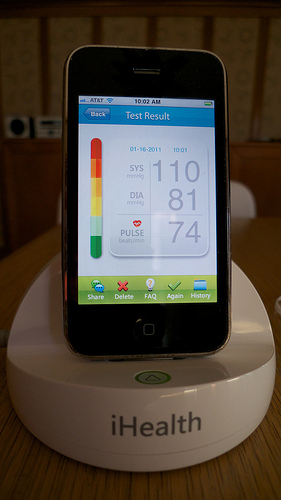
Patients Would Share Mobile Health Data With Their Physicians

40% of patients are willing to share mobile health data with their doctors, according to a new study reveals opportunity to leverage mobile health to drive positive behavior change. 

A new study released by mobile engagement provider Mobiquity, Inc has found that while 70 percent of people use mobile apps on a daily basis to track calorie intake and monitor physical activities, only 40 percent of patients will share mobile health data and insights with their doctors. Working with an independent research firm, Mobiquity’s “Get Mobile, Get Healthy: the Appification of Health & Fitness” study reveals the opportunity for healthcare professionals and organizations to leverage mobile to drive positive behavior change and healthier patient outcomes.

Mobiquity commissioned independent research firm Research Now to survey 1,000 consumers who use, or plan to use, health and fitness mobile apps. The study was conducted between March 5-11, 2014.

Key findings of the study include:

Mobile drives healthier lifestyles

  • 34 percent of mobile health and fitness app users said they would increase their use of apps if their doctors actively recommended it.
  • 73 percent of people claim to be healthier by using a smartphone and apps to track their health and fitness. Fifty three percent, in fact, discovered they were eating more calories than they realized.
  • Sixty-three percent intend to continue, and even increase, their mobile health tracking in the next five years.
  • 55 percent of today’s mobile health app users also plan to introduce wearable devices like pedometers, wristbands and smartwatches to their health monitoring in coming years.

Smartphone health tracking trumps social networking

  • For many, using a smartphone to track their health and fitness is more important to them than using their phone for
    • social networking (69 percent)
    • mobile shopping (68 percent)
    • listening to music (60 percent)
    • making/receiving phone calls (30 percent)

Room for improvement
What’s stopping people from using their health and fitness apps more? Doctor recommendations would be a big motivator, said 34 percent. Privacy was also a concern for 61 percent. But the chief reason people quit using these apps is simply because they forget — something that could and should be addressed by app developers to ensure health apps are less disposable.

“Our study shows there’s a huge opportunity for medical professionals, pharmaceutical companies and health organizations to use mobile to drive positive behavior change and, as a result, better patient outcomes,” said Scott Snyder, president and chief strategy officer at Mobiquity. “The gap will be closed by those who design mobile health solutions that are indispensable and laser-focused on users’ goals, and that carefully balance data collection with user control and privacy.”

Mobiquity’s study “Get Mobile, Get Healthy: the Appification of Health & Fitness” can be downloaded here: http://www.mobiquityinc.com/mHealth-report-2014.

photo credit: juhansonin via cc

  • LinkedIn
  • Twitter
  • Facebook
  • Email
  • Print

Tap Native

Get in-depth healthcare technology analysis and commentary delivered straight to your email weekly

Reader Interactions

Primary Sidebar

Subscribe to HIT Consultant

Latest insightful articles delivered straight to your inbox weekly.

Submit a Tip or Pitch

2026 Predictions & Trends

Healthcare 2026 Forecast: Executives on AI Survival, Financial Reckoning, and the End of Point Solutions

2026 Healthcare Executive Predictions: Why the AI “Pilot Era” Is Officially Over

Featured Research Report

Digital Health Funding Hits $14.2B in 2025: A Year of AI Exuberance and Market Bifurcation

Most-Read

Trump Unveils 'The Great Healthcare Plan': A Global Price-Matching Pivot to Settle the Affordability Crisis

Price Reset 2026: How Trump’s ‘Great Healthcare Plan’ Slashes Drug Costs at Trumprx.gov

Anthropic Debuts ‘Claude for Healthcare’ and Opus 4.5 to Engineer the Future of Life Sciences

Anthropic Debuts ‘Claude for Healthcare’ and Opus 4.5 to Engineer the Future of Life Sciences

OpenAI Debuts ChatGPT Health: A ‘Digital Front Door’ That Connects Medical Records to Agentic AI

OpenAI Debuts ChatGPT Health: A ‘Digital Front Door’ That Connects Medical Records to Agentic AI

From Genes to Hackers: The Hidden Cybersecurity Risks in Life Sciences

From Genes to Hackers: The Hidden Cybersecurity Risks in Life Sciences

Utah Becomes First State to Approve AI System for Prescription Renewals

Utah Becomes First State to Approve AI System for Prescription Renewals

NYC Health + Hospitals to Acquire Maimonides in $2.2B Safety Net Overhaul

NYC Health + Hospitals to Acquire Maimonides in $2.2B Safety Net Overhaul

KLAS Report: Why Hospitals Are Choosing Efficiency Over 'Agentic' AI Hype in 2025

KLAS Report: Why Hospitals Are Choosing Efficiency Over ‘Agentic’ AI Hype in 2025

Advanced Primary Care 2026: Top 6 Investments for Health Systems According to Harvard Medical School

Advanced Primary Care 2026: Top 6 Investments for Health Systems According to Harvard Medical School

AI Nutrition Labels: The Key to Provider Adoption and Patient Trust?

AI Nutrition Labels: The Key to Provider Adoption and Patient Trust?

Kristen Hartsell, VP of Clinical Services, RedSail Technologies

The Pharmacy Closures Crisis: How Independent Pharmacies Are Fixing Pharmacy Deserts

Secondary Sidebar

Footer

Company

  • About Us
  • 2026 Editorial Calendar
  • Advertise with Us
  • Reprints and Permissions
  • Op-Ed Submission Guidelines
  • Contact
  • Subscribe

Editorial Coverage

  • Opinion
  • Health IT
    • Care Coordination
    • EMR/EHR
    • Interoperability
    • Population Health Management
    • Revenue Cycle Management
  • Digital Health
    • Artificial Intelligence
    • Blockchain Tech
    • Precision Medicine
    • Telehealth
    • Wearables
  • Startups
  • Value-Based Care
    • Accountable Care
    • Medicare Advantage

Connect

Subscribe to HIT Consultant Media

Latest insightful articles delivered straight to your inbox weekly

Copyright © 2026. HIT Consultant Media. All Rights Reserved. Privacy Policy |